

Blog
Using donor sperm for IVF: everything you need to know before starting
Advice | Donor Sperm | Fertility | IVF
All of our blog posts are written, edited, or produced by the Kind iVF Content Team. This is a collaboration between our expert writers, health editors, and the leading researchers and senior doctors at our clinics across the UK.
Starting IVF with donor sperm can be both an exciting and emotional decision. Whether you’re a single woman, part of a same-sex couple, or facing male infertility, it’s natural to have a mix of hope, nerves, and questions about what lies ahead.
Choosing to use donor sperm is a deeply personal step. For some, it’s a path they’ve always known they’d take. For others, it comes after years of trying to conceive or facing unexpected diagnoses. Whatever your journey looks like, understanding the medical process and the emotional considerations can help you feel informed and empowered as you take the next step toward parenthood.
Do you need a sperm donor for IVF?
Whilst you don’t need a sperm donor to have IVF, there are several reasons someone may choose to do so:
Male factor infertility
Heterosexual couples may be advised to use donor sperm when tests show very severe male infertility, for example, very low sperm count, poor sperm motility, or no sperm present in the ejaculate (azoospermia). In these cases, IVF or ICSI with the partner’s sperm may not offer a realistic chance of success, and using donor sperm can increase the likelihood of achieving a pregnancy.
Genetic conditions
Sometimes donor sperm is chosen to prevent passing on a known hereditary condition. If genetic testing shows that a man carries a disease that could affect future children, using donor sperm may be the safest route.
Same-sex female couples
For lesbian couples, donor sperm provides the sperm needed for conception, whether through intrauterine insemination (IUI) or IVF.
Single women
More women than ever are choosing to become solo parents by choice. IVF or insemination with donor sperm from a licenced sperm bank offers a secure, regulated route to parenthood for single women ready to take this step independently.
How are sperm donors recruited and screened?
When using donor sperm, it’s essential to choose regulated sperm from a licensed sperm bank or clinic. This ensures every aspect of the donation process meets strict medical, legal, and ethical standards set by the Human Fertilisation and Embryology Authority (HFEA).
Unregulated or informal sperm donation, such as through social media or online forums, carries serious risks, including sexually transmitted infections, inaccurate medical histories, and complex legal implications around parental rights and responsibilities.
At licensed UK clinics, all donors undergo a comprehensive donor screening process before any samples can be used. This includes:
- An initial questionnaire to assess suitability.
- Semen analysis to evaluate sperm count, motility, and quality.
- Medical and genetic review, covering both personal and family health history.
- Infectious disease testing for HIV, Hepatitis B and C, Syphilis, Chlamydia, and Gonorrhoea.
- Genetic carrier screening to identify potential hereditary conditions.
- Physical examination and implications counselling, ensuring donors fully understand the process and long-term implications of donation.
Only after these steps can a donor begin providing samples. Donations usually take place over three to nine months, with each sample frozen for three to six months before being cleared for use. A final blood test is carried out to confirm the donor remains infection-free.
In the UK, donors to licenced sperm banks are not paid for their sperm; they can only be compensated for expenses, up to £45 per donation visit. This ensures that donations are altruistic and motivated by the desire to help others build their families.
How do I choose donor sperm for IVF?
Choosing your donor can feel like one of the most meaningful decisions in your fertility journey.
At Kind IVF, all donor sperm is sourced through the London Sperm Bank, a licensed and highly regulated UK sperm bank. Once registered, you can browse the donor catalogue and filter based on a wide range of attributes, such as:
- Ethnicity
- Hair and eye colour
- Height
- Religion
- Education level
- Blood group
- Previous fertility treatment success
Each donor profile also includes personal information about hobbies, interests and values, helping you find someone whose personality and background resonate with your own.
It’s completely normal to need time to process this choice. Many people experience mixed emotions, including sadness about not using a partner’s or their own genetics, or anxiety about making the “right” decision. Take your time and consider counselling to help you navigate this emotional stage with support. Many clinics require a mandatory counselling session to help you with this part of your fertility journey.
How much does donor sperm cost?
The cost of donor sperm depends on the clinic or sperm bank you use. International donors, for instance, can involve extra shipping and administrative fees.
The cost can also vary depending on the motile sperm concentration (MOT) and the number of vials you order.
London Sperm Bank has a range of sample types available, and the price per vial is dependent on how many vials your order:
- 1 vial: £1550
- 3 vials: £4185
- 6 vials: £7440
Your fertility specialist will guide you on how many vials you’ll likely need based on your treatment plan.
What is the process of IVF using donor sperm?
IVF using donor sperm follows the same steps as conventional IVF, with one practical difference: ensuring the donor sperm has been ordered and delivered to the clinic before your cycle begins.
Once your treatment plan is in place, IVF with donor sperm includes five key stages:
Step 1: Cycle regulation and ovarian stimulation
You’ll take medication to regulate your menstrual cycle and start hormone injections to stimulate your ovaries to produce multiple eggs. Medication is also used to prevent premature ovulation. Throughout this stage, your progress is monitored with ultrasound scans. When your eggs are ready, you’ll have a trigger injection to mature them before collection.
Step 2: Egg collection
This is a short, minor procedure carried out under sedation. Using ultrasound guidance, a fine needle retrieves the eggs from your ovaries. You’ll rest at the clinic for a few hours afterwards before going home. It’s normal to feel bloated or mildly crampy for a day or two.
Step 3: Donor sperm preparation
Your donor sperm is carefully thawed, checked for motility and concentration, and prepared for fertilisation.
Step 4: Fertilisation
The retrieved eggs are placed in a culture dish with the donor sperm to allow natural fertilisation. In some cases, ICSI (intracytoplasmic sperm injection) may be used, where a single sperm is injected directly into each egg. If fertilization is successful, the resulting embryos are then closely monitored as they grow.
Step 5: Embryo transfer
Three to five days later, the embryo thought to have the highest chance of implanting is transferred into your womb using a fine catheter. This painless procedure doesn’t require sedation but does need a full bladder for a clearer ultrasound view. You can resume normal activities afterwards, though many patients prefer to rest.
Any remaining high-quality embryos can be frozen for future use. If a fresh transfer isn’t recommended, your clinic will arrange a frozen transfer after your next cycle.
IVF using donor sperm with Kind
Kind donor iVF follows the same expert, patient-centred treatment as standard Kind iVF, with the addition of carefully selected donor sperm from our partners at London Sperm Bank.
From donor matching to selecting the right sample and preparing for your cycle, the Kind team supports you every step of the way, making the process as simple and reassuring as possible.
A third of all Kind iVF cycles use donor sperm, and 70% of these are for same-sex female couples. Whether you’re a solo parent by choice, part of a lesbian couple, or facing male factor infertility, you’ll benefit from ethical, UK-regulated donor sperm and compassionate, personalised care.
How much does donor sperm IVF cost?
Donor sperm IVF is typically more expensive than standard IVF due to the additional sperm cost, but Kind iVF keeps treatment accessible through its all-inclusive donor IVF package, priced at £4,500 per cycle.
This package includes:
- Expert, consultant-led care
- Pre-treatment screening blood tests
- Stimulation medication
- Monitoring scans
- HFEA treatment fees
- Egg collection with sedation
- One vial of donor sperm from London Sperm Bank
- Two counselling sessions
- Timelapse embryo imaging
- Fresh embryo transfer with EmbryoGlue
- Luteal support medication up to pregnancy test date
- Pregnancy blood test (BHCG)
- Early pregnancy scan at 6–7 weeks
Am I eligible for donor sperm IVF?
Kind iVF supports heterosexual couples, same-sex female couples, and single women who need donor sperm to conceive. Eligibility is based on three key factors:
- Age: Treatment medications must begin before your 37th birthday.
- BMI: A body mass index of 30 or less is required.
- Ovarian reserve: A healthy ovarian reserve helps ensure the best possible response to treatment.
If you’re unsure whether you meet the criteria, Kind iVF can arrange a fertility health assessment to confirm suitability and guide what comes next.
Choosing IVF with donor sperm is a courageous and hopeful decision. While the process can feel daunting, you don’t have to face it alone.
With expert care, ethical donor selection, and a team that truly understands the emotional side of fertility treatment, Kind iVF can help you take the next step toward the family you’ve been dreaming of.
To begin your Kind iVF journey, book a consultation today.




Events
From our free clinic open days to our informative webinars, our events are here to inform and support you. Our open days are a great opportunity to meet the team, have a tour and receive a free mini doctor consultation. While our webinars allow you to log on wherever you are and get your questions answered.

In collaboration with DIVA Magazine, the UK’s leading magazine for LGBTQIA+ women and non-binary people, we are proud to announce The…

Whether you’re just starting to think about fertility treatment or actively planning your next step, our Kind iVF Open Day is the…
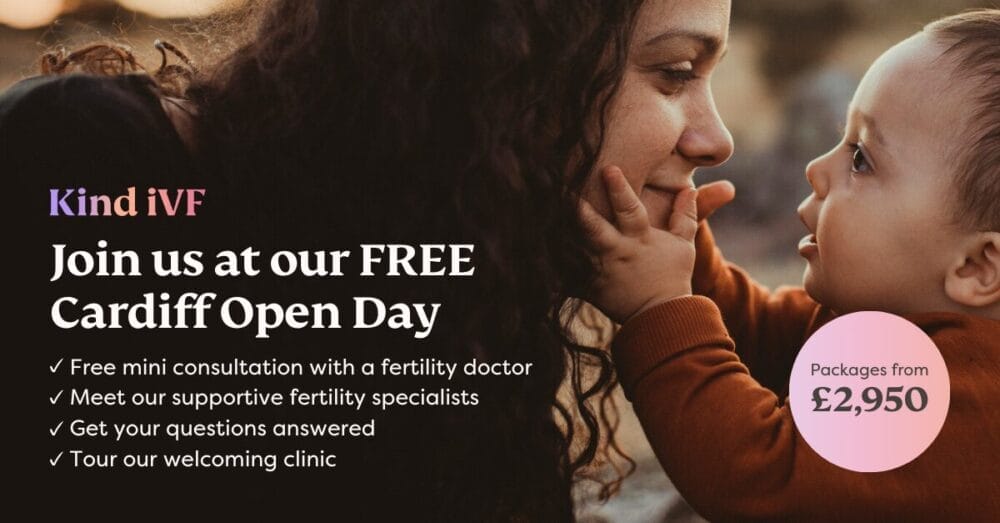
Whether you’re just starting to think about fertility treatment or actively planning your next step, our Kind iVF Open Day is the…

Whether you’re just starting to think about fertility treatment or actively planning your next step, our Kind iVF Open Day is the…

Whether you’re just starting to think about fertility treatment or actively planning your next step, our Kind iVF Open Day is the…

Whether you’re just starting to think about fertility treatment or actively planning your next step, our Kind iVF Open Day is the…

Whether you’re just starting to think about fertility treatment or actively planning your next step, our Kind iVF Open Day is the…

Whether you’re just starting to think about fertility treatment or actively planning your next step, Led by our Medical Director, Professor…

Whether you’re just starting to think about fertility treatment or actively planning your next step, our Kind iVF Open Day is the…